
China Faces Whopping 64% Tariff Wall as Trump Escalates Trade Tensions
In a surprising and aggressive economic move, President Trump has announced sweeping tariffs on China, sending shockwaves through the global market. The cumulative tariff now stands at a daunting 64%, raising alarms of a possible full-scale trade war.
Key Points
- Trump’s administration has raised tariffs on China significantly, now totaling a hefty 64%.
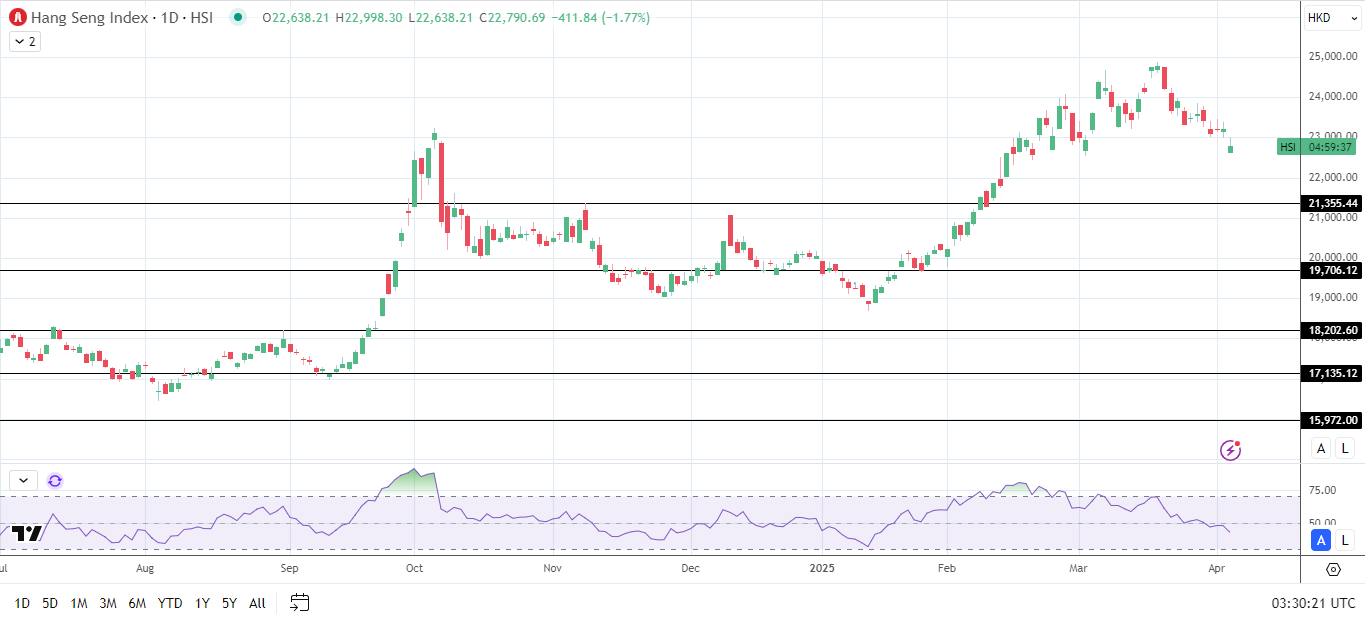
- Asian markets have reacted negatively, with the Hang Seng witnessing a 1.77% drop.
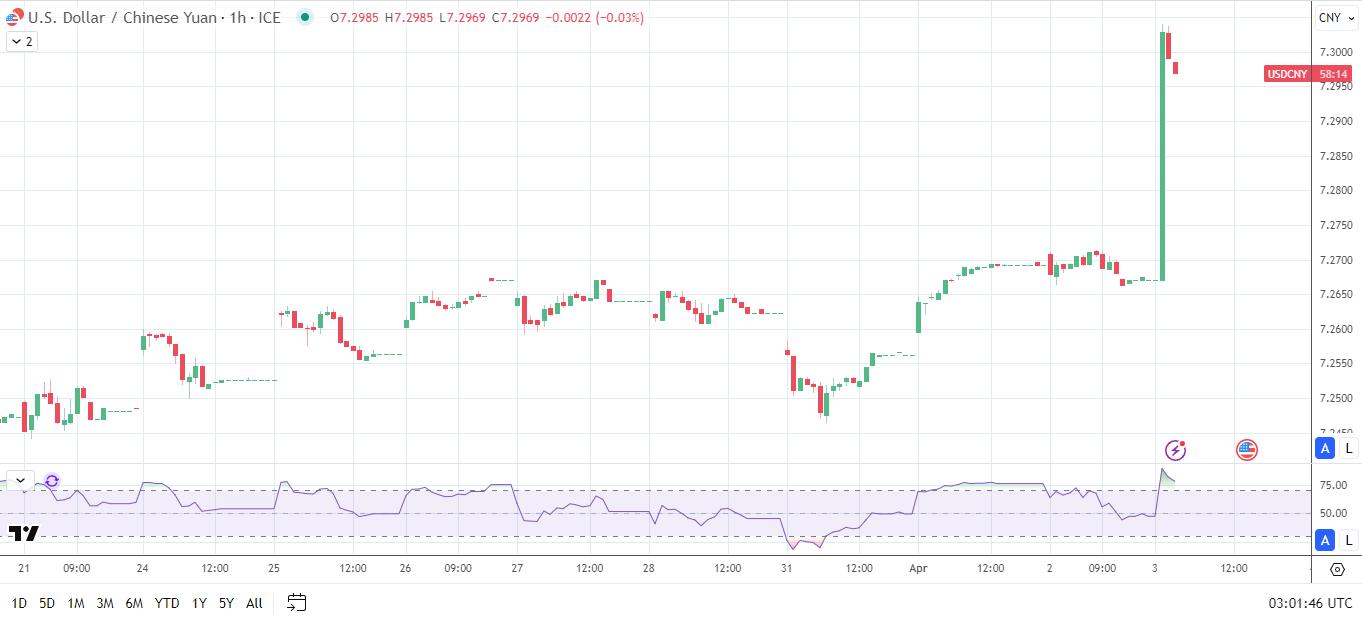
- The Yuan slid to $7.3040 following the announcement, negotiating a precise balance between tariff pressures and economic strategy.
Trump’s Tariff Strategy
On April 2nd, Trump unveiled these tariffs, which are severe compared to previous measures. This critical move comes after increments in recent months, further straining US-China relations.
Key highlights of the tariff adjustments include:
- Universal baseline tariff of 10%.
- Additional 34% tariff imposed specifically on Chinese imports.
- New measures reflect a confluence of prior and current US tariff history, adding layers to tariffs already imposed during the Trump and Biden administrations.
“After today’s 34% new reciprocal tariff rate on China, I now have the absolute tariff rate on China at 64%, not 54%…” -Tony Sycamore, Market Analyst, IG.com
China’s Response: Cautious but Calculated
Despite the deepening crisis, China’s response has been measured. The Commerce Ministry is urging the US to reconsider and engage in equitable dialogue. Furthermore, President Xi Jinping is reportedly planning to meet EU leaders in Vietnam, possibly seeking to establish alternative trade relationships.
China’s Vice Grip on Vital Industries
The stakes are high for Europe as they confront China’s rising influence, particularly in emerging sectors like electric vehicles (EV) and artificial intelligence (AI). With a desperate need to diversify trade links, China’s offer of affordable EVs may tempt European nations;
“As a European, I’m all in on improving trade relations with China. Give me some affordable Chinese EVs.” -Daniel Romero, HyperTechInvest
The Yuan Takes a Hit
In a bold strategy to counterbalance the escalating tariffs, the People’s Bank of China (PBoC) has slashed the Daily CNY Central Parity Rate to $7.1889, noting the Yuan’s immediate response to tariff news with prices peaking at $7.3040.
Market Reactions Roaring to Life
As Asian markets digest the tariff news, the Hang Seng Index plunged 1.77%, alongside dips in the Shanghai Composite and CSI 300. While these tariffs overshadowed the positive Chinese services PMI data released, analysts stress the potential for resilience in China’s economy driven by policy incentives.
Outlook: What’s Next?
With the situation rapidly evolving, markets will be on high alert. A notable devaluation of the Yuan could induce a widespread sell-off in equity markets, but a measured approach may restore some investor confidence.
Summary
In the coming days and weeks, the impact of these tariffs will reshape market transactions and relationships, establishing a new normal in international trade.
Stay tuned for our ongoing analysis of these developments. If you’re serious about staying informed,
 {
#col-1860185636 > .col-inner {
padding: 0px 0px 0px 0px;
}
}
</style>
</div>
<div id="col-1826141251" class="col show-for-small medium-1 small-12 large-1" >
<div class="col-inner" >
<div id="gap-1025695802" class="gap-element clearfix" style="display:block; height:auto;">
<style>
#gap-1025695802 {
padding-top: 30px;
}
</style>
</div>
</div>
</div>
<div id="col-1554032183" class="col medium-6 small-12 large-6" >
<div class="col-inner text-right" >
<div id="gap-315993473" class="gap-element clearfix" style="display:block; height:auto;">
<style>
#gap-315993473 {
padding-top: 0px;
}
@media (min-width:550px) {
#gap-315993473 {
padding-top: 30px;
}
}
</style>
</div>
[contact-form-7 id="18"]
</div>
</div>
</div>
</div>
<style>
#col-579665098 > .col-inner {
margin: 0px 0px -66px 0px;
}
</style>
</div>
</div>
</div>
<style>
#section_17048894 {
padding-top: 0px;
padding-bottom: 0px;
}
#section_17048894 .ux-shape-divider--top svg {
height: 150px;
--divider-top-width: 100%;
}
#section_17048894 .ux-shape-divider--bottom svg {
height: 150px;
--divider-width: 100%;
}
</style>
</section>
<section class="section footer-background dark" id="section_1166644213">
<div class="bg section-bg fill bg-fill bg-loaded" >
</div>
<div class="section-content relative">
<div id="gap-525186366" class="gap-element clearfix" style="display:block; height:auto;">
<style>
#gap-525186366 {
padding-top: 50px;
}
</style>
</div>
<div class="row row-collapse" id="row-800424667">
<div id="col-1424008086" class="col medium-5 small-12 large-5" >
<div class="col-inner dark" >
<div class="img has-hover x md-x lg-x y md-y lg-y" id="image_1141493937">
<div class="img-inner dark" >
<img width="900" height="265" src="https://seventrading.net/wp-content/uploads/2022/09/logo-seven-trading.png" class="attachment-large size-large" alt="" decoding="async" loading="lazy" srcset="https://seventrading.net/wp-content/uploads/2022/09/logo-seven-trading.png 900w, https://seventrading.net/wp-content/uploads/2022/09/logo-seven-trading-800x236.png 800w, https://seventrading.net/wp-content/uploads/2022/09/logo-seven-trading-768x226.png 768w" sizes="auto, (max-width: 900px) 100vw, 900px" />
</div>
<style>
#image_1141493937 {
width: 33%;
}
</style>
</div>
<p>Seven Trading is neither a broker, nor funds manager. The website does not provide any paid services. All content of Seventrading.net is presented for educational or entertainment purposes only. </p>
</div>
<style>
#col-1424008086 > .col-inner {
padding: 0px 10px 0px 10px;
}
</style>
</div>
<div id="col-1309263107" class="col medium-2 small-6 large-2" >
<div class="col-inner dark" >
<div id="text-410201336" class="text">
<h3>SERVICE</h3>
<ul>
<li>Seven company</li>
<li>About us</li>
<li>Contact</li>
<li>Affiliate</li>
<li>Recruit</li>
</ul>
<style>
#text-410201336 {
text-align: left;
}
</style>
</div>
</div>
<style>
#col-1309263107 > .col-inner {
padding: 0px 10px 0px 10px;
}
</style>
</div>
<div id="col-1344236770" class="col medium-5 small-12 large-5" >
<div class="col-inner dark" >
<div id="text-1867005926" class="text">
<h3>ECOSYSTEM</h3>
<style>
#text-1867005926 {
text-align: left;
}
</style>
</div>
<div class="slider-wrapper relative" id="slider-1178909770" >
<div class="slider slider-nav-circle slider-nav-large slider-nav-light slider-style-normal"
data-flickity-options=)