








Valetax in 2026: six account types from an $8 deposit, spreads from 0.0 pips, leverage up to 1:2000, swap-free trading and FSC Mauritius regulation.
Reviews

Most brokers ask you to choose between a low barrier to entry and serious trading conditions. Valetax refuses the trade-off: eight US dollars opens a live account, and that same account reaches spreads from 0.0 pips, leverage up to 1:2000, negative balance protection and swap-free trading on every instrument. For a trader who wants to start small without being pushed into a stripped-down product, that combination is rare.
Valetax now counts more than 300,000 clients across 15 regions, runs on MetaTrader 4 and MetaTrader 5, and holds an Investment Dealer licence from the Financial Services Commission of Mauritius. This review goes through the six account types, the cost structure behind each one, the leverage system, and the details worth knowing before you fund anything. You can open a Valetax account here once you have the full picture.
Valetax at a glance
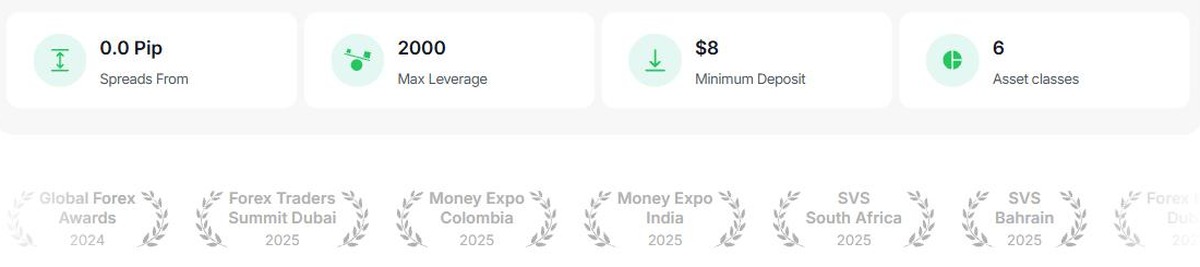
- $8 minimum deposit on four of the six account types
- Spreads from 0.0 pips on the ECN account, from 0.6 pips on PRO
- Leverage up to 1:2000, managed by an equity-tier system
- Six asset classes — forex, indices, metals, crypto, energies and a 60+ currency pair list
- 300,000+ clients across 15 regions, with 24/7 customer service
- Segregated client funds and negative balance protection on every account type
- MT4 and MT5 on desktop, web browser, Android and iOS
Six Valetax account types, one $8 doorway
Where most brokers give you three tiers and gate the good conditions behind a five-figure deposit, Valetax publishes six account types and lets four of them open at $8. The difference between them is genuinely about how you trade, not how much you are worth.
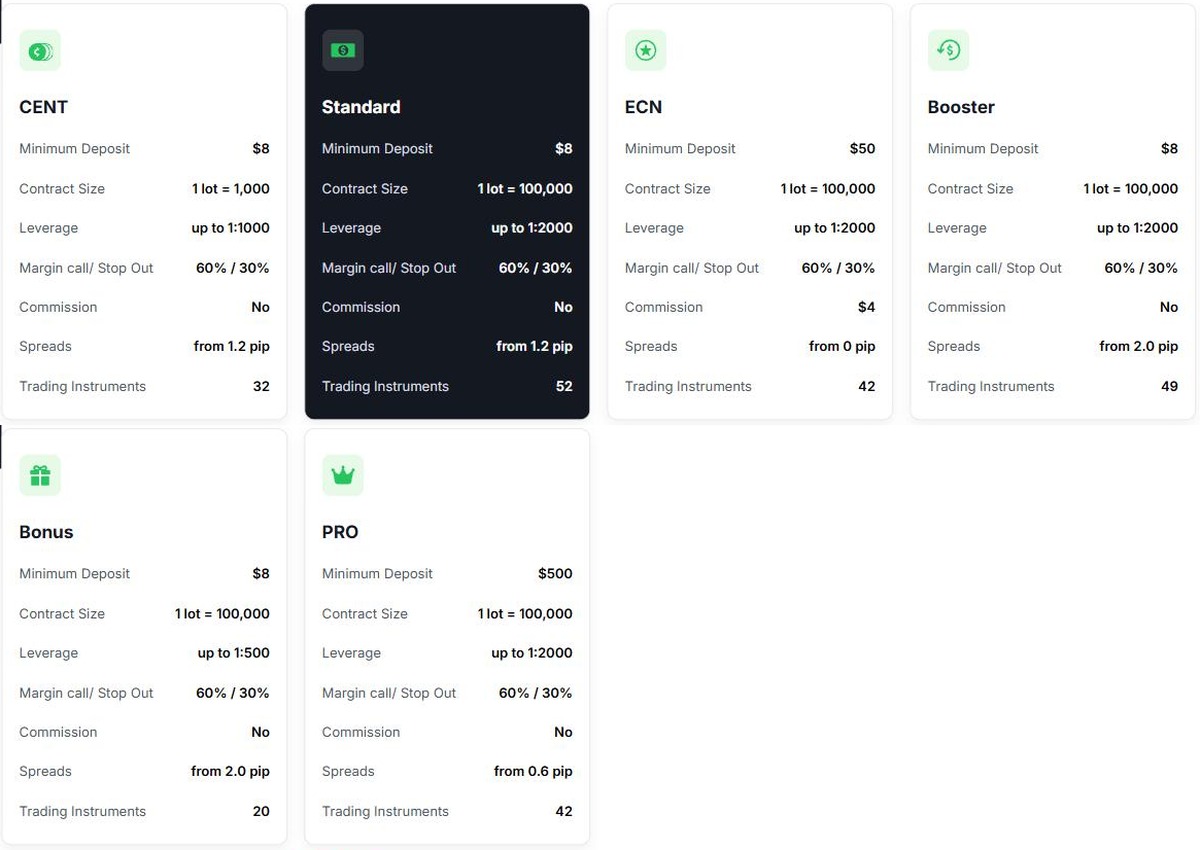
- CENT — $8 minimum, 1 lot = 1,000 units, leverage to 1:1000, 32 instruments. Balances show in cents, so a $20 account trades in figures that feel real without risking real money in size. The natural home for beginners and for testing an expert advisor.
- Standard — $8 minimum, full 100,000-unit lots, leverage to 1:2000, spreads from 1.2 pips, no commission, and the widest instrument list at 52. The default choice for most traders.
- ECN — $50 minimum, spreads from 0.0 pips with a $4 commission per lot, 42 instruments. The cheapest structure once volume builds.
- Booster — $8 minimum, spreads from 2.0 pips, no commission, 49 instruments, and rebates earned on your own trades and on the trades of the network you refer.
- Bonus — $8 minimum, leverage to 1:500, built around deposit bonuses that lift your usable equity.
- PRO — $500 minimum, spreads from 0.6 pips with zero commission, leverage to 1:2000, 42 instruments. The sweet spot for experienced traders who dislike reconciling a commission line.
Every account shares the same 0.01 minimum lot, the same 60% / 30% margin call and stop-out levels, and the same permissions: hedging allowed, scalping allowed, automated trading allowed. Nothing is switched off on the cheap accounts.
What trading with Valetax actually costs
Cost is the one number that compounds against you, so it is worth doing the arithmetic rather than reading the marketing. On the ECN account a EUR/USD round turn at 0.0 pips costs the $4 commission and nothing else. On PRO the same trade carries a 0.6 pip spread and no commission at all — roughly $6 of spread on a standard lot, with nothing to reconcile afterwards. On Standard, 1.2 pips and zero commission keeps the calculation to a single line.
Which is cheapest depends entirely on your volume. High-frequency and algorithmic traders almost always come out ahead on ECN, because a raw spread plus a fixed commission beats a marked-up floating spread once the lots stack up. Traders placing a handful of positions a week usually prefer PRO or Standard, where there is only one number to watch. The useful part is that Valetax lets you hold both — there is no cap on how many accounts you open, so you can run the comparison on your own trades rather than trusting anyone’s table.
Leverage up to 1:2000, with guardrails built in
Valetax offers leverage up to 1:2000, which is at the high end of the market. What makes it workable rather than reckless is that the leverage is tied to your account equity and adjusts automatically as the balance grows.
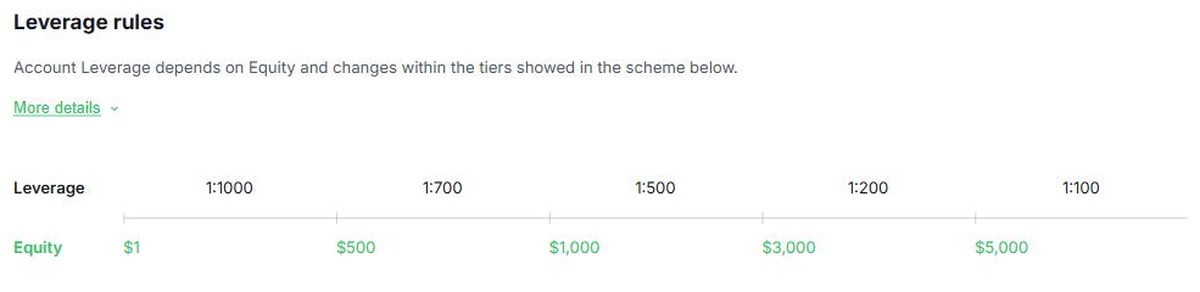
A small account sits in the top tier. As equity crosses $500, $1,000, $3,000 and $5,000, the available leverage steps down through 1:700, 1:500, 1:200 and 1:100 — and if equity falls more than 10% below a tier boundary, it steps back up again. There are two further protections that most brokers do not bother to publish: leverage is halved for new positions opened within two hours either side of the daily rollover, and cut to 1:200 around major news releases (15 minutes either side of rollover, 10 minutes before and 5 minutes after significant news). In other words, the system removes the most dangerous leverage at exactly the moments spreads widen.
Swap-free on every Valetax account, in every region
This one deserves its own heading because of how unusual it is. Valetax lists swaps as “not applicable (all regions)” on all six account types — not as a paid add-on, not as an Islamic account you have to apply for, and not limited to particular countries. If you hold positions overnight or run a swing strategy, the overnight financing line that quietly erodes returns at most brokers simply is not there. Over a month of held positions that is often worth more than the spread difference between two account types.
Protection that comes as standard
Across every account type, Valetax includes the safeguards that usually separate a serious broker from a thin one:
- Negative balance protection — your losses cannot exceed the account balance, even on a gap
- Segregated client funds — client money held separately from company money
- Margin call at 60%, stop-out at 30% — published clearly and identical on all accounts
- Hedging, scalping and automated trading all permitted, with up to 200 open orders
- Tunable leverage — you can reduce your own leverage below the tier maximum
- 24/7 customer service
The combination of 1:2000 leverage and negative balance protection is the point worth noticing. High leverage is only genuinely usable when there is a floor under the downside, and here there is one. You can see the account conditions for yourself before committing anything.
What you can trade
Six asset classes sit on the same login: over 60 currency pairs covering majors, minors and exotics; indices with zero commissions; metals for gold and silver exposure; crypto across the major digital assets; and energies. Instrument counts run from 20 on the Bonus account up to 52 on Standard, so if breadth matters, Standard is the one to open. The full instrument list, with live spreads, sits behind the Valetax registration page.
MT4 and MT5, on whatever you are holding
Valetax runs both MetaTrader generations rather than forcing a migration. MT4 remains the industry workhorse — if you have years of custom indicators and expert advisors, they keep working. MT5 brings the deeper toolset for traders who want it. Both are available as desktop terminals, browser-based web platforms and mobile apps for Android and iOS, so a position opened at a desk can be managed from a phone without re-entering anything. Execution is market execution with no dealing desk intervention.
Valetax CopyTrade: follow a Money Manager, keep the safety rails
CopyTrade lets you replicate the strategies of experienced Money Managers from inside your Member Area, and the implementation has two details that matter more than the marketing.
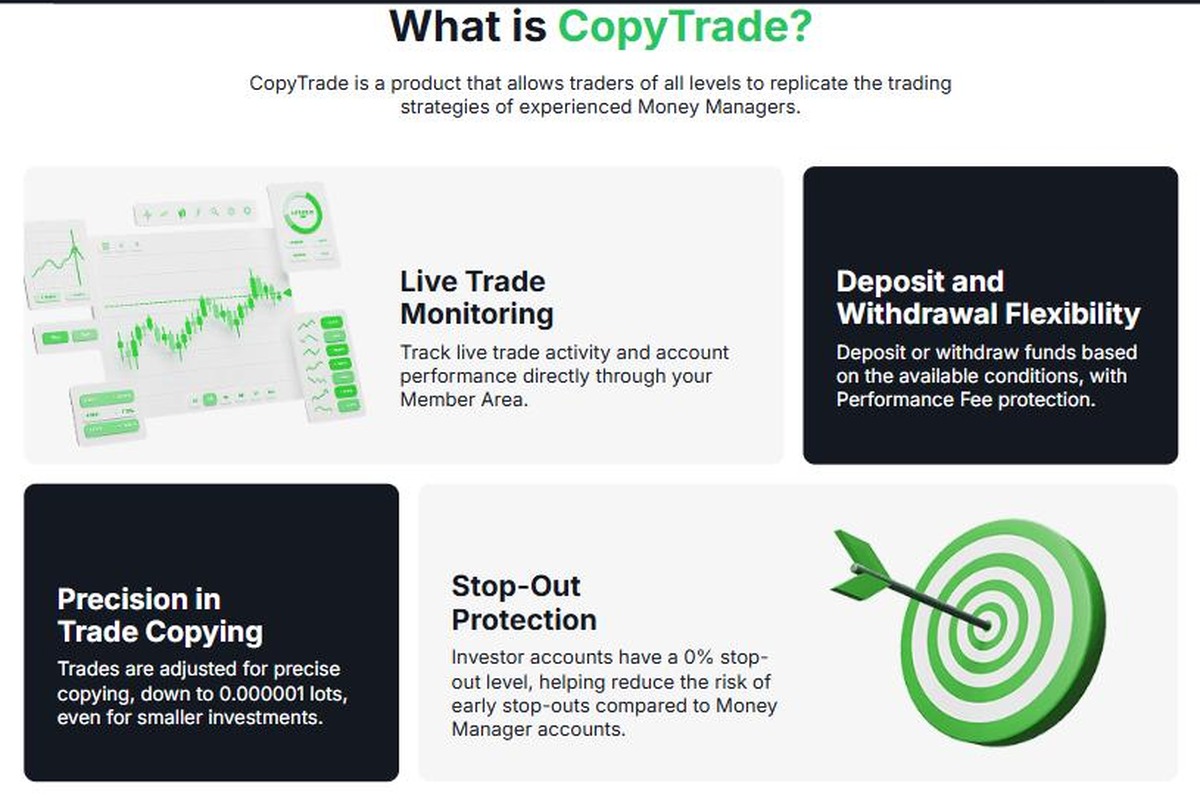
- Stop-out protection. Investor accounts run at a 0% stop-out level, which materially reduces the risk of being closed out early compared with the Money Manager’s own account.
- Precision copying to 0.000001 lots. Trades are scaled exactly, so a small investment mirrors the strategy faithfully instead of being rounded into a distorted position.
- Live monitoring. Trade activity and account performance are visible in real time in the Member Area, not in a monthly statement.
- Deposit and withdrawal flexibility, with performance-fee protection built into the conditions.
As with any copy trading, execution timing and results can differ from the strategy provider’s because of market conditions and latency, and past performance is not a forecast. The structural protections raise the floor; they do not remove the risk.
Licences, funds and who Valetax serves
Three facts belong in any honest broker review. First, the licensing. Valetax International Limited is a Mauritius company, registration 180644, operating as an Investment Dealer (Full Service Dealer excluding Underwriting) under licence GB21026312 issued by the Financial Services Commission of Mauritius — a real national regulator whose register you can search yourself. Valetax Global Limited is registered in St Vincent and the Grenadines (registration 23398); that is a company registration, not a forex licence, since the SVG authority does not license forex brokers. Certain payments run through Valetax Processing LTD, a Cyprus payment agent (HE495274). Which entity holds your account depends on where you are onboarded, and Valetax says so plainly on its own site — worth two minutes of reading at sign-up.
Second, the risk. These are leveraged margin products, and the broker states it in its own words: “It is possible to sustain losses that exceed your initial deposits, and the use of leverage can work both in your favour and against you.” The negative balance protection on the accounts is the practical counterweight to that sentence, but position sizing remains yours to manage.
Third, eligibility. Valetax does not provide services to residents of Afghanistan, Cuba, North Korea, Iran, Lesotho, Mauritius, Myanmar, Singapore or the United States of America. Check your own country against the terms before depositing rather than after.
Getting started with Valetax
Valetax keeps onboarding to three steps: register, fund through one of the licensed local payment providers, and trade. The broker works with regional payment channels rather than card rails alone, which is why deposits clear quickly in the markets it serves. A sensible order of operations:
- Open a CENT account first if you are new. Eight dollars buys a real account with real execution, and balances shown in cents make position sizing intuitive.
- Pick the cost structure, not the tier. High volume points to ECN, a handful of trades a week points to PRO or Standard — and you can hold both.
- Set your own leverage. Tunable leverage means 1:2000 is a ceiling, not an instruction.
- Use the swap-free status deliberately. If your edge involves holding positions for days, that is where it pays.
- Confirm which entity holds your account and read the terms that apply to it before your first deposit.
The case for Valetax is straightforward: an $8 entry point that does not come with a downgraded product, six genuinely different account structures instead of three cosmetic ones, leverage that manages itself around the riskiest hours, swap-free trading everywhere, and negative balance protection sitting underneath all of it. If those conditions fit how you trade, you can register with Valetax here and start on the demo side of things before committing capital.


